Creativity, Regeneration & the World We Build
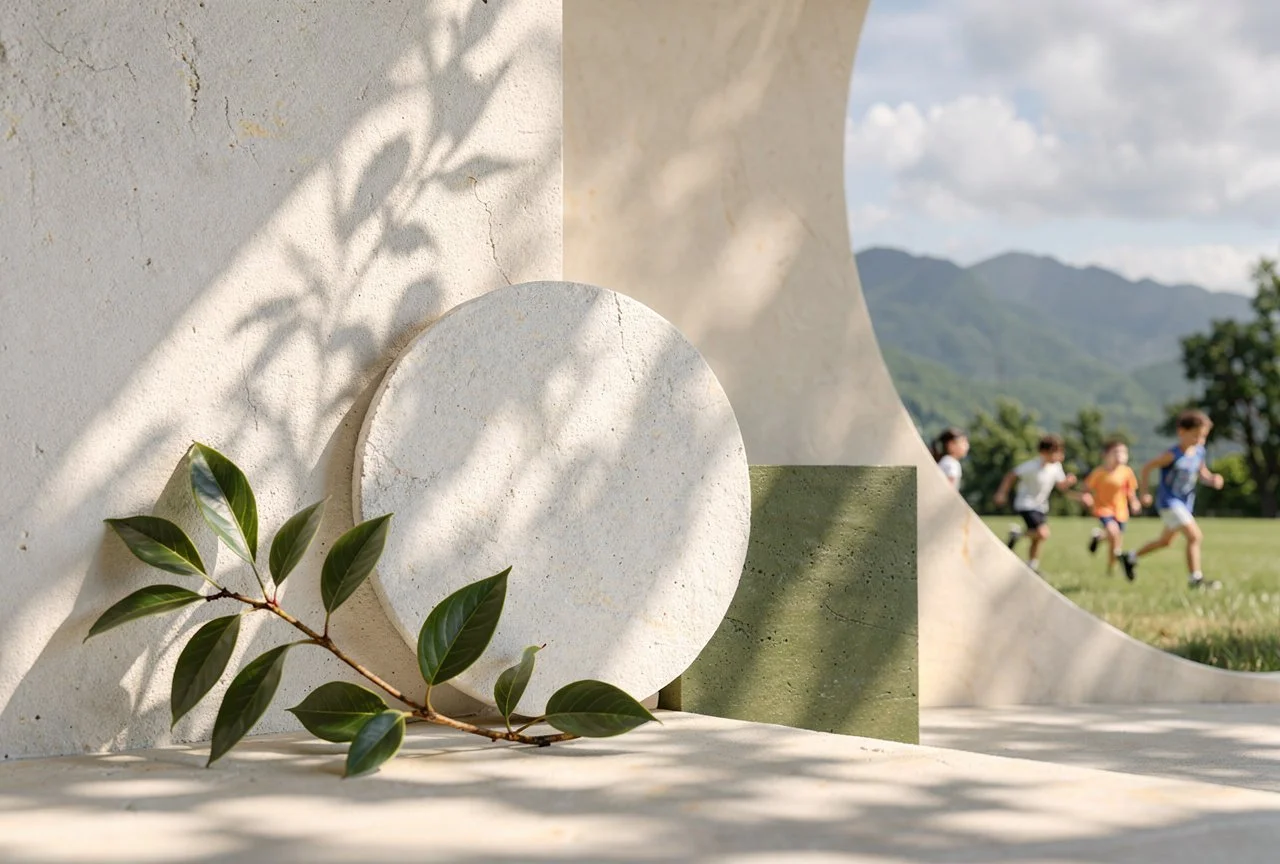
The image accompanying this article was created using Ecosia AI. We chose Ecosia because it generates more clean energy than its AI uses and directs 100% of its profits toward climate action.
There is certainly no shortage of conversation about how we can improve society. We study problems, measure them, debate their causes and develop increasingly sophisticated ways of describing how we arrived where we are. All of that has value, but there is another question that interests us just as much: What alternatives can we choose to build?
That question is part of what led to golden eyes project.
Creativity is often treated as belonging to a particular group of people. Artists are creative. Designers are creative. Writers, musicians & inventors are creative. In reality, creativity is one of the ways human beings solve problems. We use it whenever we take what we know, look at it from another perspective and try to imagine a possibility that doesn’t exist yet.
Sometimes the result is a painting or a building; sometimes it’s a different way of organizing a community, teaching children, growing food, distributing resources or even approaching a problem we’ve accepted for so long that we’ve stopped questioning why it exists in the first place.
This way of thinking naturally led us toward regeneration. Sustainability has given us an important framework for thinking about how we reduce harm, conserve resources & preserve what remains. Regenerative thinking pushes the conversation further by asking what it would look like for the things we create to actually leave people, communities & natural systems healthier because they exist.
It’s an ambitious idea, and applying it to human systems gets complicated quickly. Children don’t develop independently of their families & communities. Communities don’t exist independently of culture, education, economics or the physical environments around them. Human health & environmental health overlap in ways that become increasingly difficult to ignore. Once you begin looking at problems through that lens, it becomes harder to neatly separate one issue from another.
That is also why art belongs in this conversation.
Art has always been more than decoration. It records what people value and what they fear. It preserves experiences that might otherwise disappear, challenges ideas that have become comfortable and gives people ways to communicate things that aren’t easily reduced to statistics. A photograph can make a distant problem suddenly feel close. A story can allow someone to understand an experience they’ve never lived. A designer can take a limitation that appears fixed and treat it instead as a constraint to work around. Creativity changes the way we see things, and that shift in perspective is often the beginning of changing what we do about it.
At gep, we’re particularly interested in another dimension of creative power: who decides what creativity is going to build?Creativity already generates enormous cultural, social & economic value. Artists, designers & other creative professionals spend their lives using their abilities to solve problems, communicate ideas & create things for employers, clients & commissioners. But the objective is often established before the creative enters the process. Their creativity helps shape society, even when they have relatively little agency over what kind of society their creativity ultimately helps shape.
What happens when creatives are given another choice? What if they can intentionally direct some of their work, knowledge & participation toward the world they want to help create? That question sits behind gep’s concept of Creativity as Capital: recognizing creativity as a form of value and exploring what becomes possible when creatives have greater agency over where that value goes. At gep, we’re putting that idea into practice by creating ways for creative contributions to generate tangible resources & opportunities for children.
This journal gives us somewhere to explore the larger ideas surrounding that work.
Through writing, we’ll explore art, regeneration & humanity. Those categories are intentionally broad. Here, you'll see articles covering regenerative design principals followed by essays discussing childhood development, community gardens, cultural traditions, environmental science, creative economies, or the way a particular artist has challenged common understandings around societal issues.
Some pieces may be written by us; others will eventually come from writers, artists, professionals & people with experiences or perspectives worth sharing.
We aren’t interested in creating a collection of articles that all arrive at the same answer. Building something better requires being willing to examine ideas from more than one direction, including perspectives that complicate our own. There is an enormous amount of knowledge spread across different professions, cultures, communities & individual lives, and we think interesting things happen when those worlds are allowed to overlap.
That is what we hope this writing space becomes: somewhere to be curious about the world as it is and as it could be.