

About gep’s Child-Empowering
Initiatives
The Problem
Every child enters the world the same way: dependent, curious, full of unrealized potential. Healthy human development requires certain conditions. Not luxuries.
Nutritious Food: Growing bodies & developing brains require consistent access to real nourishment. Cognitive development, emotional regulation & physical health are all directly tied to what a child eats and how reliably they eat it.
Clean Water: Access to safe, clean water is foundational to physical health, sanitation and the basic dignity every child deserves.
Safe, Stable Housing: A child who doesn’t know where they’ll sleep cannot focus on growing. Chronic housing instability is one of the strongest predictors of poor developmental outcomes across every measure researchers track.
Quality Education: Not just access to a school building but access to learning environments with adequate resources, experienced teachers and the genuine expectation that every child in the room is worth investing in.
Nature: Contact with the natural world is not supplemental to child development. It is documented as essential. Research consistently shows that children with regular access to nature demonstrate lower cortisol levels, stronger attention, reduced anxiety and greater capacity for systems thinking.
Skill-Building Experiences: The experiences that develop creativity, practical capability, emotional intelligence, cultural identity & civic participation. The experiences that answer the question every child is quietly asking: What am I good at? What do I have to offer? Who am I?
Purpose: The understanding that their existence has meaning beyond themselves. That what they do affects others. That they belong to something larger than their immediate circumstances. Research identifies purpose as the single strongest protective factor against depression, addiction & disengagement in young people.
The problem is that necessary childhood conditions are not equally accessible to all children. Children born into overlooked communities are disproportionately born into environments where one or more of these conditions is missing, insufficient or unstable. Not because of anything they did, but because of how resources, infrastructure & investment have been distributed for generations.
The Progression of
Compounding Deprivation
-
Food deserts. Lead in water pipes. Overcrowded classrooms with underfunded budgets. Neighborhoods without green space. Housing too unstable to feel like home. These are not individual failures. They are structural conditions that shape what is possible for a child before they ever make a single choice about their own life.
-
Even when basic needs are partially met, children in overlooked communities are often deprived of the experiences that build whole human beings: after-school programs, instruments, mentorships, travel, exposure to what the world contains and what they might contribute to it.
These things don’t just sustain a child but develop them into someone with skills, identity, purpose, and the sense that their existence matters.
-
When structural & developmental deprivation go unaddressed long enough, disconnection is the result. Disconnect from friends, family, nature, and from a belief that things can be better.
Disconnected children become disconnected adults. Adults who are harder to reach, harder to organize, and harder to convince that their contribution means something.
gep’s Approach
We cannot immediately resolve every dimension of childhood deprivation. What we can do now is put the experiences, skills & resources that support healthy childhood development directly into the hands of overlooked kids & teens. gep aims to help break the generational cycle of childhood deprivation by empowering children to see the best in themselves and lift up their communities.
-
The distinction matters more than it might appear.
Charity assumes deficit. It positions the child as someone who lacks and the organization as someone who provides. The transaction is one directional. The child receives. The child learns, quietly & repeatedly, that they are a receiver.
Empowerment assumes capability. It positions the child as someone who already has everything they need inside them and the program as a tool to harness it.
Research consistently shows that programs built around empowerment & skill development outperform charity models in every long term outcome researchers track: education, health, economic mobility & civic participation.
Children who develop genuine competence, agency & social skills through structured programming carry those outcomes forward across their entire lives.
gep is an empowerment organization. Every initiative we build, every challenge we design, every reward a child earns is built around one foundational belief: These children are capable. The program just gives them the tools to prove it.
-
Every gep initiative is designed around what children can do, build, grow & contribute. Children who earn things, make things, grow things, and organize things learn something entirely different about themselves than children who primarily receive things.
Earned rewards build genuine self-efficacy: the belief, grounded in personal evidence, that effort produces results. Research documents this as one of the most durable & transferable outcomes a child can develop. It goes with them into every classroom, every relationship, every moment of difficulty they encounter for the rest of their lives.
This is why gep’s programs are structured around challenge & earning rather than provision & receiving. The child who grows a plant from a seed and eats what grew has learned something no nutrition class could teach. The child who organizes a neighborhood cleanup and sees its impact has learned something no civics lesson could replicate. The child who earns a supply box through weeks of consistent effort values what’s inside it differently.
That difference is not incidental. It is the whole intervention.
-
For children from overlooked communities that have historically been treated with suspicion, low expectations & institutional indifference, being trusted is not a small thing.
Research documents that children from low income backgrounds and communities with histories of institutional mistreatment show significantly lower levels of trust in institutions from early life onward. That distrust is not irrational. It is learned. And it is one of the most significant barriers to engagement, opportunity & upward mobility these children face.
gep extends unconditional trust to every child from day one. No prerequisites. No probationary period. No surveillance. The program arrives at their door because someone believed they were worth it. That trust activates something. Research across multiple countries shows that when a child experiences a genuinely trustworthy institution it directly enhances their willingness to trust other people.
The ripple effects extend beyond the individual child into their relationships, their communities, and their capacity to build something alongside others. gep doesn’t just teach children to be trustworthy. It shows them what being trusted feels like. For many underprivileged children, that experience is genuinely rare.
-
Every gep initiative is designed with care & intention because all children deserve something beautiful made specifically for them.
This is not aesthetics for aesthetics’ sake. Environmental psychology research documents a direct link between the quality of a child’s physical environment and their stress levels, self-regulation capacity & developmental outcomes.
Children surrounded by neglect in their schools, their neighborhoods, their built environments receive a continuous message regarding their worth. gep sends a different message to children through art, design & nature.
-
gep doesn’t just provide resources. Every initiative is designed to teach children to think regeneratively: to restore rather than deplete, to contribute rather than consume, to leave things better than they found them.
This philosophy runs through everything. The way challenges are structured. The way communities are engaged. A child who grows up thinking regeneratively doesn’t just become a better individual. They become someone their community can build with.

The Foundations
Every initiative implemented by gep is designed to build a strong developmental foundation within each child it reaches. Not skills alone. Not knowledge alone.
-
A child who knows who they are: where they come from, what they stand for, what makes them distinctly themselves, is remarkably difficult to diminish.
Identity is not given. It is built. Through cultural connection, ancestral knowledge, creative expression, and the accumulated experience of being treated as someone worth knowing.
Research consistently identifies identity coherence as one of the strongest protective factors against depression & risk behaviors.
gep builds identity through every territory a child explores: through diverse cultural stories, ancestral challenges, and creative expression practices.
-
Mental & physical wellbeing are not luxuries. They are the conditions under which everything else becomes possible.
A child who cannot regulate their nervous system cannot learn effectively. A child who has never been taught to listen to their body cannot care for it. A child who has no framework for understanding their emotional states cannot navigate relationships, manage difficulty, or sustain effort over time.
For children from overlooked communities, where stress is chronic, healthcare is inconsistent, and rest is often a privilege, the message that their body & mind are worth caring for is among the most radical things a program can deliver.
gep builds health through daily practices, nutrition awareness & emotional literacy woven progressively across initiatives.
-
There is a specific & irreplaceable feeling that comes from finishing something difficult.
From growing something living to building something with your hands. The feeling of organizing people around a shared goal and watching it succeed. That feeling, grounded in personal evidence rather than someone else’s assessment, is called self-efficacy. And research documents it as one of the most durable & transferable outcomes a human being can develop.
Self-efficacy doesn’t stay in the garden or in a civic project. It stays with the child through every moments of difficulty or uncertainty. A child who has real, tangible, personal evidence that they finish hard things will return to that evidence for the rest of their life.
Resilience is not a separate foundation. It is the natural byproduct of accumulated competence. A child with enough evidence of their own capability has too many roots to be uprooted.
-
To self. To ancestry. To others. To nature.
Disconnection is the defining crisis of our time, and children from overlooked communities experience it most acutely. Disconnected from schools that don’t see them. From neighborhoods that don’t invest in them. From a natural world they rarely have safe access to. From cultural lineages that have eroded under systemic pressures.
A child who feels genuinely connected, who has tended something living, who has built something that enhances their life, who has contributed something real to their community, and learned something true about where they come from, is remarkably resilient against almost everything life throws at them.
Connection is not a feeling gep manufactures. It is a capacity gep builds through consistent, repeated experiences across multiple territories until it becomes the child’s natural orientation toward the world.
-
The understanding that your existence has meaning beyond yourself.
Research identifies purpose as the single strongest protective factor against depression, addiction, and disengagement in young people. Not achievement. Not talent. Not even connection. Purpose, the felt sense that what you do matters to something larger than yourself.
gep does not tell children what their purpose is. Instead gep creates the conditions under which purpose emerges naturally, through enough varied experiences across enough territories that a child begins to discover what calls to them, what they’re good at, what lights them up, and what kind of person they want to become.
Purpose doesn’t announce itself. It arrives quietly through the doing. And once it arrives, it stays.
The Methodologies
The five foundations don’t emerge by accident. They are the result of deliberate, research-backed design characteristics embedded & interwoven into every initiative created by gep. Each method reinforces the others in every challenge & experience a child takes on.
-
The ability to analyze situations from a broader perspective. To understand cause & effect, recognize patterns, and think beyond an immediate obstacle is one of the most valuable capacities a child can develop.
Children who develop systems thinking are better equipped to navigate complexity, solve problems creatively, and understand that barriers they encounter are often contextual rather than personal. Research in educational psychology consistently links systems thinking to stronger academic outcomes, greater problem solving capability, and higher resilience in the face of adversity.
gep builds systems thinking through civic challenges, community problem solving, and exposure to diverse cultural & historical contexts, developing children who analyze situations rather than simply react to them.
-
gep designs every initiative around regenerative principles: teaching children to think in cycles rather than lines, to restore rather than deplete, and to consider what they contribute to a system not just what they take from it.
-
New practices are introduced gradually and anchored to already established ones.
Each layer builds on the last until the accumulated practices become natural daily behavior rather than conscious effort.
-
The brain in a state of play learns faster and retains more deeply than the brain in a state of obligation.
gep initiatives are designed to feel genuinely engaging. Not because engagement is incidental, but because it is the primary condition under which lasting learning occurs.
-
Every gep initiative is designed with deliberate care. gep’s overall design strategy draws from evidence-based frameworks that operate simultaneously across every initiative:
Trauma-Informed Design: many children gep reaches are operating from nervous systems shaped by adverse experiences. Trauma-informed design builds spaces, systems & experiences around that understanding: prioritizing safety, trust, predictability & agency at every point of contact.
gep’s trust architecture, the unconditional invitation, the self-directed challenge structure, and the absence of surveillance or evaluation are all expressions of trauma-informed design principles.
Salutogenic Design: from Aaron Antonovsky’s foundational research, salutogenic design asks not what makes people sick but what makes people resilient. His core concept, sense of coherence, describes the feeling that life is comprehensible, manageable & meaningful.
gep’s five foundations build all three dimensions of coherence simultaneously. Identity & cultural affirmation build comprehensibility. Competence & earned rewards build manageability. Connection & purpose build meaning.
Biophilic Design: humans have a documented need for connection to living natural systems. Research consistently shows that regular contact with nature reduces cortisol, strengthens attention, reduces anxiety, and improves developmental outcomes in children. gep’s nature-based challenges, community garden initiatives & regenerative operating strategies are applied biophilic design. It is not just an aesthetic choice, but a documented pathway to improved childhood wellbeing.
Environmental psychology research documents a direct link between the quality of a child’s physical environment to their stress levels, self-regulation capacity, and developmental outcomes. Every object a child receives through gep, every challenge gep creates, and every project a child moves through is designed with these frameworks in mind.
-
gep structures rewards proportionally to effort & investment.
This balance teaches the relationship between effort, investment, and return as lived experience rather than instruction.
-
gep extends unconditional trust to every child from enrollment. No prerequisites. No surveillance. Research documents that children from communities with histories of institutional mistreatment show significantly lower institutional trust.
A genuinely trustworthy institution directly enhances a child’s broader capacity for interpersonal trust with measurable social & developmental implications.
-
Self Determination Theory identifies autonomy as one of three core drivers of intrinsic motivation.
gep builds genuine choice into every layer of every initiative, ensuring children direct their own experience rather than moving through a prescribed sequence.
-
Social learning produces developmental outcomes that solitary learning cannot replicate.
gep initiatives are designed to invite peer & community participation, building collaboration, communication & civic responsibility through shared experience rather than instruction.
-
Cultural continuity is a documented protective factor against depression, risk behavior & identity fragmentation in young people.
gep deliberately incorporates diverse cultural stories & parables, “against-all-odds” epics of human achievement & ancestral research challenges within its initiatives. This ensures every child finds their dreams achievable, heritage honored & identity affirmed.
-
Story is one of the most powerful & universal learning technologies available.
gep uses narrative frameworks to give children a meaningful context for their own developmental journey. One they can inhabit, project themselves into, and return to across time.
-
gep engages multiple learning modalities simultaneously: reading, writing, physical movement, creative making, outdoor experience, social interaction & visual tracking.
-
Humans do not learn from experience alone. They compound on that learning by actively reflecting on the experience.
gep builds structured reflection into every initiative as a metacognitive practice, converting children’s experiences into wisdom rather than memory alone.
-
gep initiatives are deliberately scaffolded from accessible to complex.
Early experiences are designed to produce early wins, building the evidence of competence that sustains engagement through more difficult challenges ahead. Difficulty increases gradually & intentionally across time.
-
The deepest learning doesn’t happen when a child receives knowledge. It happens when they pass it on.
Our initiatives are designed so that a child’s visible engagement naturally draws others in. A child working through a challenge in their community becomes a living invitation.
Group challenges, civic projects & nature-based activities organically position more experienced participants alongside those just beginning. Not through instruction or obligation, but through proximity & shared purpose.
What emerges is mentorship in its most authentic form… Older participants find themselves explaining, guiding & leading because the program’s design made that the most natural expression of where they are. In doing so, they consolidate their own learning at a depth that receiving knowledge alone never produces. Research calls this the protégé effect.
gep builds the conditions for it to arise on its own. A child who teaches has become something more than a student. They have become evidence, to themselves and to others, that they know something worth sharing. That shift in identity is among the most durable outcomes the program produces.
Our Initiatives Model
Our child-empowering initiatives are designed to build on each other the same way a child’s challenges build on each other.
Every initiative gep develops follows the same regenerative principles: starting where children are and expanding outward as their curiosity, confidence & sense of possibility grows. Kids & teens are not evaluated for readiness but inspired toward it. Through genuine incentives, earned rewards, and challenges designed to feel worth taking on, children are made ready to go further. And when they do, bigger opportunities for the child & their community begin to manifest.
This is not a collection of random programs. It is an integrated system in which a child’s growing capacity and their community’s infrastructure build on each other: simultaneously, organically, and at a pace the children set.
gep’s Keystone Initiative
The foundational knowledge behind all of gep’s initiatives are taught within gep Magazine, our remote mentorship program. Designed for financial efficiency & scalability, this initiative is where a child’s capacity is built before complexity develops. gep Magazine plants the seeds necessary to ensure larger initiatives are implemented where conditions for success have been nurtured.
Organized across eight territories of human development; mind, body, home, relationships, creativity, nature, community & civics, and ancestry & culture, this initiative develops multiple dimensions of knowledge, capacity & personal identity through each. Together, they prepare children for more than just personal growth. Each territory contributes to a child’s understanding of regenerative communities, while building the inner foundation that its stewardship requires.
Woven throughout every territory are environment-improving challenges that expand as discipline & ambition grow. Participants learn to how to organize on a small scale and compounds on that thinking from their bedroom drawer to a formal proposal identifying where regenerative installations can improve their community.
These challenges do more than develop and improve a child’s inner and outer worlds. They deepen their capacity for regenerative thinking in every aspect of life while preparing them for gep’s broader initiatives. Every submission received by children through gep’s initiatives serve at least three purposes simultaneously: improving the program with live data, informing where initiatives are most needed based on child documentation, and demonstrating to funders & partners the geographic reach of child-community interest across a map.
A Regenerative Model
Every initiative gep creates is rooted in regenerative principles & child empowerment, but not every initiative reaches children the same way. Our child-based initiative, gep Magazine incentivizes children to explore topics, practice techniques, create & grow at their own pace. Their experiences strengthen the knowledge, agency & understanding necessary to then participate more meaningfully within their communities and then the world.
Community-based initiatives expand that opportunity outward. These initiatives invite children, advisors, local knowledge & gep resources together to build something communities can steward & rely on long after introduction. gep’s community-based initiatives can emerge through a participant’s community & civics challenge in gep Magazine or through gep’s community outreach campaigns. From these outreach efforts, a group of children with enough research, teamwork & advisory support can pursue community-based initiatives, such as a community garden or water-filtration system. Varying pathways with a single destination: placing real experiences, knowledge, skills & regenerative resources into children’s hands, then cultivating the conditions for them to thrive.
Initiatives
Child-Based Initiatives
gep’s initiatives model is designed as an ever-growing system of child empowerment. The foundational knowledge behind all of our initiatives is taught within our keystone initiative:
Community-Based Initiatives
Community-Based Initiatives directly place regenerative resources within communities of children that need them most. Watch the roots of gep’s Initiatives Model as they grow…
Growing With a Mission
What you see here is only the beginning. As new opportunities emerge, we’ll continue developing initiatives, expanding challenges within gep Magazine & pursuing partnerships with organizations already doing exceptional work for child empowerment. We’ll be sharing initiatives & partnerships here as they develop.
Where We’re Starting…
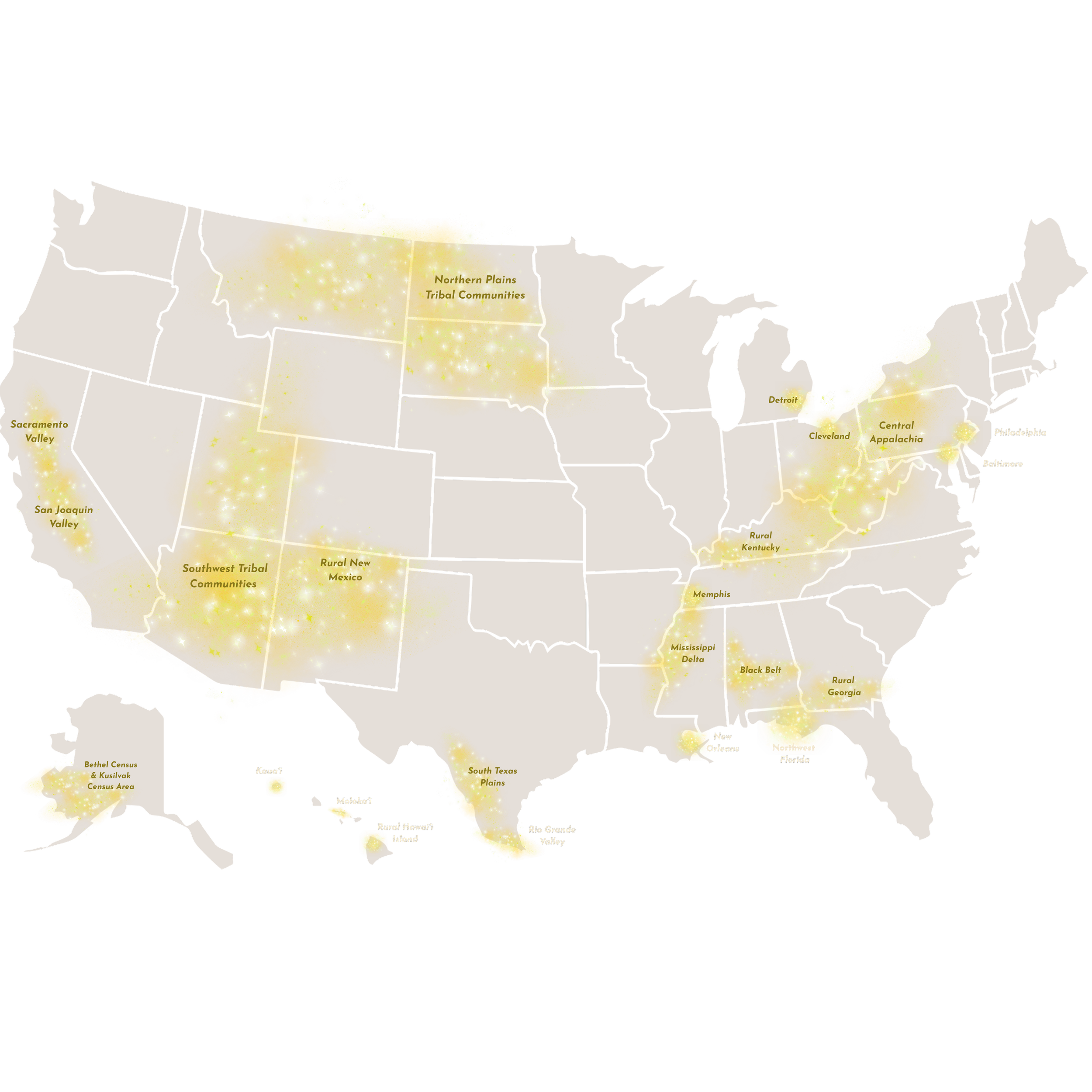
gep Magazine’s pilot is being developed with a national reach and intentional focus on communities where children have historically experienced gaps in resources, investment & developmental opportunity. The regions shown here represent our initial outreach & participant-recruitment priorities for the gep Magazine pilot.
As children participate, their experiences & community insights will help golden eyes project better understand where future initiatives, partnerships & regenerative resources can create meaningful impact.
Partnership
Opportunities
gep’s Initiative Model is designed to grow through collaboration. We seek partners whose resources, products, technologies, expertise & funding can expand what becomes possible for children & communities.
Partnerships are built around reciprocity. The goal is to create genuine value for children while developing meaningful opportunities for the organizations contributing alongside us. Depending on the collaboration, that may include documented impact, community visibility, impact storytelling, product integration, research insights, or opportunities to demonstrate how a partner’s work can create value in the real world.
-
Organizations developing regenerative technologies & solutions across water, energy, food, agriculture, environmental systems & community infrastructure can bring their knowledge, products & expertise into gep’s Initiative Model.
Through gep Magazine, kids & teens can learn how regenerative technologies work, why they matter & where they could create value within their own communities. As participants progress into larger community-based challenges, that knowledge can create pathways from learning about a solution to recognizing where it could be meaningfully applied.
When a partner’s technology reaches a community because children identified a need, explored possible solutions & helped advocate for its implementation, the result is more than an installation. It becomes an opportunity for education, participation & community stewardship built around the resource itself.
-
Companies whose products align with gep’s values and support the safety, wellbeing, learning, creativity & development of young people can help place meaningful resources directly into the hands of participants.
Partnerships may provide challenge materials, learning tools, creative resources, safety products, rewards or other resources that remove barriers & expand what children are able to experience through gep’s initiatives.
Brand partners can also bring us opportunities we haven’t considered. When a product, resource, expertise or idea creates meaningful developmental value, gep can explore how it might strengthen an existing initiative or inspire new challenges.
Select challenges can also extend to gep’s broader community, inviting our social audience to try them for themselves while giving us an interactive way to introduce the partners, products & resources helping make those experiences possible.
Explore current partnership opportunities within each initiative to see where your organization could contribute.
-
Foundations, corporate giving programs & other funding partners can support individual initiatives, specific areas of child development, community-based projects or gep’s broader Initiative Model.
Funding allows gep to expand access, develop new challenges, provide materials & earned rewards, support community projects and respond when children & communities identify opportunities requiring greater investment.
We welcome conversations with funders interested in supporting both immediate implementation and the long-term development of gep’s child-empowerment model.
Have something in mind?